
What Architects Need to Know Before Adopting AI

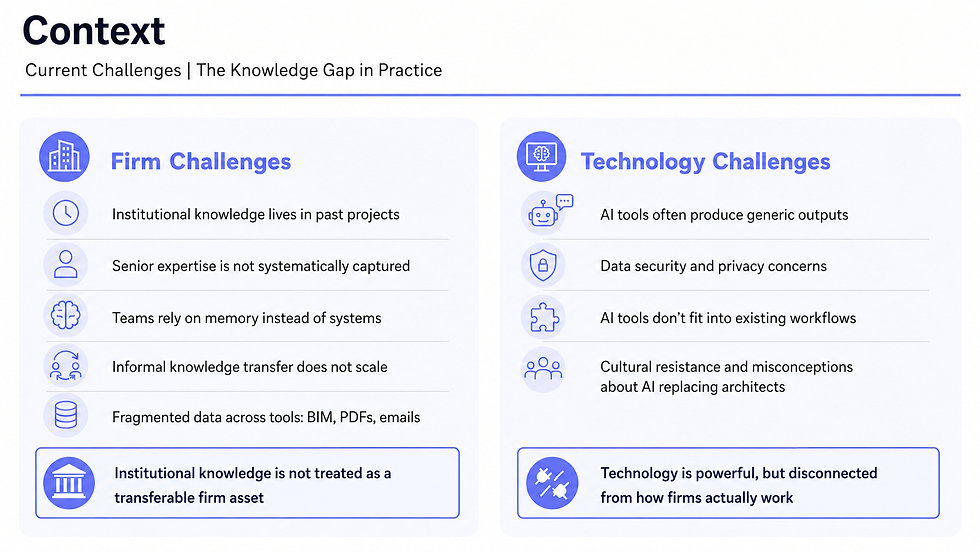
Almost every architect is thinking about AI, but most of them are still figuring out where to get started.
Before your firm chooses a platform, it helps to understand what AI can actually do for you, what your data needs to look like, and how to build a system that delivers real results.
What to Expect
AI is genuinely useful for the parts of your practice that take up far more time than they should, such as pulling up past details, finding reusable assemblies, pre-populating drawing sets, and helping junior staff locate information. These are the repetitive, manual tasks that slow everyone down and keep architects bogged down in administrative work.

But AI can’t just be plugged in to do what you want without the right inputs. It struggles to work with data that has never been properly structured, which is where a lot of firms run into trouble.
Its real value is in amplifying what architects already know, and that can only happen when the knowledge is organized and accessible.
Five Signs That Your Firm is Ready for AI
Before adopting AI, it's worth taking an honest look at the state of your data. These are the five factors that ARKI looks at when working with a new client, to understand where your archive stands and what it's already capable of.
Your data is becoming a strong foundation for AI adoption. Two-thirds of A/E firms say they struggle with where and how to apply AI, and a big part of that comes down to how accessible and connected their project information is. AI performs best when it can easily interpret and navigate existing knowledge.
Your firm treats knowledge as something worth keeping. 41% of the AEC workforce is projected to retire by 2031, taking decades of institutional knowledge with them. Employee tenure in architecture has already fallen from 7.1 to 4.9 years since 2012.
Your firm already has a strong digital foundation in place. Around 74% of architecture professionals are using BIM, firms using tools like Revit and shared digital workflows are well positioned to benefit from AI. These systems create the structure and accessibility that AI relies on to support.
You can name the specific problem you want AI to solve. Vague goals produce vague results. 73% of failed AI projects lacked clear executive alignment on what success looks like before they started. The firms that get real value from AI tend to start with a well-defined pain point.
Leadership is genuinely on board. AI adoption is not a one-person project. Only 20% of AEC firms say they feel highly prepared for AI implementation, even though 75% expect it to boost profitability. That gap often comes down to leadership. Projects with sustained leadership involvement achieve 68% success rates, compared to 11% for those that lose executive sponsorship within six months.

AI Readiness Checklist
Before committing to any AI platform, you need to run through this checklist:
Can a new staff member find a past detail without asking someone?
Is leadership aligned on what problem AI is meant to solve?
Have we defined what success looks like?
AI readiness is not a finish line.
It’s the process of turning fragmented knowledge into a connected, scalable firm asset.

FAQ: AI Adoption in Architecture Firms
What should architects look for in an AI platform?
Look for a platform built specifically for architecture – one that understands drawing types, discipline relationships, and project phases. Generic document management tools won't understand your firm's standards or project history.
Can a firm adopt AI without cleaning up its data first?
ARKI can help structure your data as part of the onboarding process.
How is ARKI different from other AI tools for architects?
ARKI is built around how architecture firms actually work – using visual AI to interpret drawings the way architects do, and structuring your archive into a searchable knowledge system.
How to Assess Your Data Before Starting with AI
A lot of firms skip straight to finding the best tool. But taking the time first to evaluate your data, workflows, and where AI can create the most value for your team, you'll get a lot more out of it in the long run.
ARKI's readiness quiz is a good place to start. It's about five minutes and will give you a clear picture of where your firm stands before moving forward.


